



Have a Question?
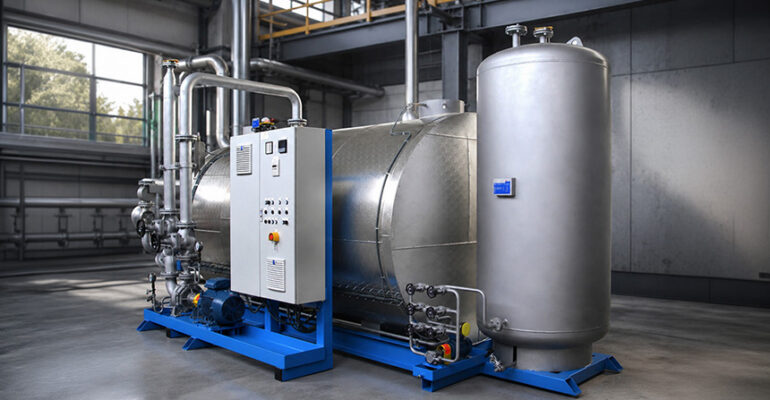
Fired Thermal Fluid Heaters for High-Capacity Industrial Process Heat
AURA’s fired thermal-fluid heating systems are custom-engineered to deliver high-capacity, continuous, and reliable heat transfer for demanding industrial applications. Each system is tailored to the required fuel type, heat load, and temperature profile, with optimized thermal-fluid circuits, combustion systems, and controls architecture. Designed to accommodate installation constraints and long-term lifecycle objectives, these systems provide safe, efficient, and stable operation while maximizing energy efficiency, reliability, and system uptime.
For systems with existing fuel infrastructure, large heat loads, or demanding continuous-duty operation, a fired thermal fluid heater can provide a robust and cost-effective process heat solution.
What is a Fired Thermal Fluid Heater?
A Fired Thermal Fluid Heater uses burners and combustion systems to heat circulating fluid through a specially engineered heater coil arrangement.
The heated hot oil is circulated through industrial process systems where stable and reliable high-temperature heat is required.
AURA systems are custom-designed based on fuel type, process requirements, operating conditions, and integration needs to ensure efficient and long-term performance.
System Properties
- Type of Heating: Fired / Combustion-Based
- Consumer Medium: Thermal Fluid
- Temperature Range: Up to 842°F
- Power Range: Up to 25,000 kW / 85.30 MMBtu/h
Fired thermal fluid systems provide high-capacity process heating for demanding industrial applications requiring continuous and reliable thermal performance.
Operating Principle of Fired Thermal Fluid Heaters
A fired thermal fluid heater uses a combustion system to transfer heat into circulating thermal fluid through a high-efficiency heater coil. The hot oil flows through a closed-loop system, delivering indirect process heat to equipment such as calender rolls, presses, dryers, reactors, extruders, ovens, and process vessels.
After transferring its energy to the process, the cooled thermal fluid returns to the heater for reheating and recirculation. Integrated burner controls, temperature regulation, flow monitoring, and safety systems help ensure reliable, efficient, and stable operation across a wide range of industrial applications.
The process includes:
- Fuel is supplied to the burner system according to the selected fuel type and combustion design.
- Combustion generates thermal energy inside the heater.
- Heat is transferred through the heater coil into circulating thermal fluid.
- A circulation pump moves the hot oil through the process loop.
- Heat is transferred indirectly to the industrial consumer.
- The cooled fluid returns to the heater for reheating.
- Burner management and safety systems regulate operation based on temperature, flow, pressure, flame supervision, and process demand.
Technical Advantages of Fired Thermal Fluid Heaters
| Feature | Value |
|---|---|
| High Thermal Output | Supports demanding industrial processes and continuous production environments with reliable heat delivery. |
| Fuel Flexibility | Enables optimization around available fuel sources, energy costs, and site infrastructure requirements. |
| Thermal-Oil Heat Transfer | Delivers high process temperatures while operating at significantly lower pressures than comparable steam systems. |
| Three-Pass Heater Design | Maximizes heat extraction from combustion gases to improve thermal efficiency and fuel utilization. |
| Thermal-Oil-Flooded Rear Wall | Reduces localized thermal stress, enhancing equipment reliability and extending operational life. |
| Optional Air Pre-Heater | Recovers waste heat to improve overall system efficiency and reduce fuel consumption. |
| Custom Burner Configuration | Tailors combustion performance to specific fuels, process demands, emissions targets, and operating conditions. |
| Pre-Assembled Functional Units | Simplifies installation, shortens project schedules, and minimizes site integration challenges. |
| In-House Manufacturing | Provides greater quality assurance, documentation consistency, and long-term service support. |
| Custom System Design | Ensures the heater package is engineered around the process, safety requirements, controls strategy, and lifecycle objectives. |
The business case for a fired thermal fluid heater depends on factors such as heat demand, operating hours, fuel availability, energy costs, emissions objectives, and lifecycle requirements. Fired systems are often the preferred choice for high, continuous heat loads where existing fuel infrastructure and long operating schedules make fuel-based heating a cost-effective and reliable solution.
Best Fit When
A fired thermal fluid heater is a strong fit when the process requires high thermal output, continuous operation, and reliable high-temperature heat transfer. It is particularly well suited for facilities with existing fuel infrastructure or applications where large heat loads make fuel-based heating more practical and cost-effective than electric alternatives.
- High Heat Output is Required
Supports large process heat loads and demanding industrial applications. - Continuous Production is Critical
Provides reliable heat for long operating hours, multiple shifts, and continuous-duty processes. - Fuel Infrastructure is Available
Leverages existing natural gas, LPG, fuel oil, diesel, hydrogen, or specialty fuel systems. - Electrical Capacity is Limited
Reduces the need for major electrical infrastructure upgrades. - Operating Costs Favor Fuel-Based Heat
Can offer attractive lifecycle economics where fuel costs are competitive. - High Process Temperatures are Needed
Delivers consistent high-temperature heat through a closed-loop thermal fluid system. - Proven Industrial Reliability is Required
Widely used in dryers, reactors, presses, calenders, polymer processing, pulp & paper, and chemical production. - Long-Term Industrial Service is Expected
Designed for durability, dependable operation, and extended equipment life in demanding environments.
Typical AURA System Scope
Depending on the application, an AURA fired thermal fluid heater can be delivered as a complete engineered system. The scope is defined around fuel type, heat load, temperature profile, installation environment, control requirements, safety philosophy, and applicable standards.
Typical scope may include:
- Heater vessel and coil system
- Burner and combustion system
- Fuel train and fuel supply interface
- Circulation pump and pump skid
- Expansion tank and thermal-fluid management system
- Temperature, pressure, and flow instrumentation
- Burner management system (BMS)
- Flame supervision and safety interlocks
- Control cabinet and process integration
- Combustion air and flue-gas interface
- Optional air pre-heater for improved efficiency
- Skid-mounted or pre-assembled functional units
- Piping interfaces and integration support
- 3D layout and engineering drawings
- ASME and National Board documentation, where applicable
- Documentation package and commissioning support
Applications
- Dryers and Ovens
For pulp and paper, food, wood, and industrial manufacturing processes requiring continuous high-temperature heat. - Calender and Roll Temperature Control
For paper, nonwovens, textiles, film, and finishing processes requiring precise and stable roll temperatures. - Press Heating and Polymer Processing
For plastics, composites, rubber, wood, and industrial forming applications requiring uniform heat transfer. - Reactors and Agitator Vessels
For chemical and process applications requiring controlled and stable indirect heating. - Autoclaves and Process Vessels
For applications demanding reliable high-temperature process heat during extended operating cycles. - Food and Edible-Oil Processing
For high-capacity process heating where indirect thermal-fluid heat transfer ensures product quality and production reliability. - Storage Tanks and Product Pipelines
For maintaining product temperature and viscosity in auxiliary heating applications where fuel-fired thermal fluid systems offer an economical alternative to electric heating.
Key Features
- High-efficiency fired thermal fluid systems
- Custom-engineered burner and combustion configurations
- Precise temperature and combustion control
- Integration with existing industrial systems
- Durable design for continuous industrial use
- High-capacity heating performance
- Optimized thermal efficiency and reduced heat loss
Applications
- Chemical and petrochemical industries
- Plastics and polymer processing
- Pulp & paper manufacturing
- Food and edible oil processing
- Textile and nonwoven industries
- Industrial process heating systems