



Have a Question?
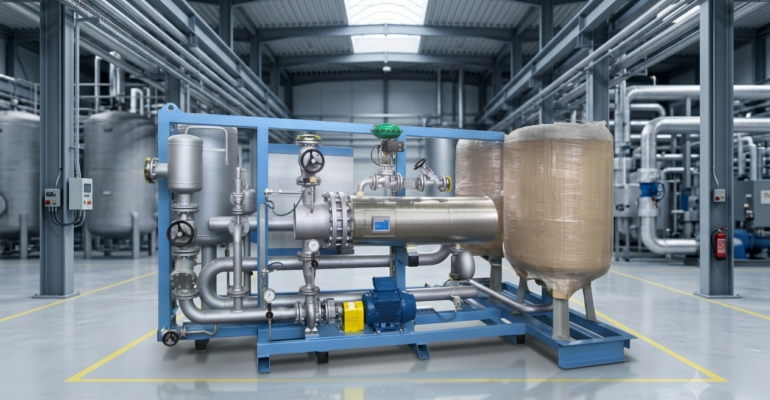
Efficient Hot Water Generation Through Waste Heat Recovery
Industrial processes often release large amounts of thermal energy through hot flue gases. A Waste Heat Hot Water Heating System captures this waste heat and converts it into usable hot water for industrial heating and process applications without additional fuel consumption.
AURA systems are designed to maximize energy recovery, reduce operating costs, and improve overall process efficiency while supporting more sustainable industrial operations.
By utilizing available waste heat, industries can significantly reduce primary energy consumption and lower CO₂ emissions.
What is a Waste Heat Hot Water Heating System?
A waste heat hot water system uses the thermal energy from industrial exhaust gases to heat circulating water through a specially engineered heat exchanger.
Instead of releasing hot exhaust gases unused into the atmosphere, the system recovers the thermal energy and transfers it into a hot water circuit for industrial processes, facility heating, or auxiliary applications.
AURA systems are individually engineered based on exhaust gas temperatures, flow conditions, and process requirements to ensure efficient and reliable operation.
System Properties
- Type of Heating: Waste Heat
- Consumer Medium: Hot Water
- Temperature Range: 248°F – 428°F
- Power Range: Up to 20,000 kW / 68.24 MMBtu/h
Industrial exhaust gases often contain substantial recoverable energy that would otherwise be lost. AURA systems utilize this waste heat to reduce the demand on conventional heating systems and improve overall efficiency.
Operating Principle of Waste Heat Hot Water Heating System
Industrial systems such as gas turbines, engines, furnaces, and combustion processes generate hot flue gases with temperatures of several hundred degrees.
AURA Waste Heat Hot Water Systems recover this energy through a controlled heat transfer process.
The process includes:
- Waste heat enters the recovery heat exchanger.
- Water circulates on the secondary side of the system.
- Heat is transferred from the gas stream into the water circuit.
- The heated water is supplied to process users, facility systems, preheating duties, or auxiliary loads.
- Controls regulate water temperature, flow, bypass, and process demand.
- The cooled water reenters the heat exchanger circuit for reheating.
- Safety and monitoring logic are aligned with pressure level, water temperature, and plant requirements
Your Advantages at a Glance
A Waste Heat Hot Water Heating System is the right fit when:
- A usable hot-water or pressurized-hot-water demand exists.
- The plant needs heat for process water heating, preheating, facility heat, or auxiliary heat.
- Exhaust or flue-gas energy is available during the same time as water demand.
- The required water temperature is compatible with the available heat source.
- Existing hot-water infrastructure can be used or economically added.
- A thermal-fluid system would be unnecessary or overly complex for the application.
Applications
- Process water preheating
For operators that can use recovered heat before conventional water heating. - Facility and utility heating
For industrial buildings, utility loops, or auxiliary heat demand where hot water is useful. - Engine and turbine exhaust recovery
For sites with available exhaust energy and compatible water-side demand. - Furnace and oven exhaust recovery
For moderate-temperature heat recovery into hot-water systems. - Chemical and industrial production facilities
For process-support applications with stable water demand. - Refineries and energy systems
For auxiliary hot-water or process preheating applications.
Key Features
- Efficient utilization of industrial waste heat
- Custom-engineered hot water heating systems
- Integration with existing hot water infrastructure
- High-efficiency heat exchangers
- Automated temperature and system controls
- Robust design for continuous operation
- Optimized energy recovery and reduced heat loss
Applications
- Waste heat recovery in refineries
- Industrial furnaces
- Chemical production facilities
- Power generation systems
- Engine exhaust heat utilization
- Industrial facility heating systems